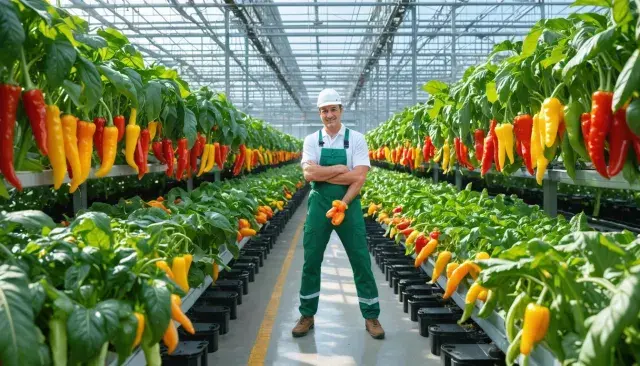
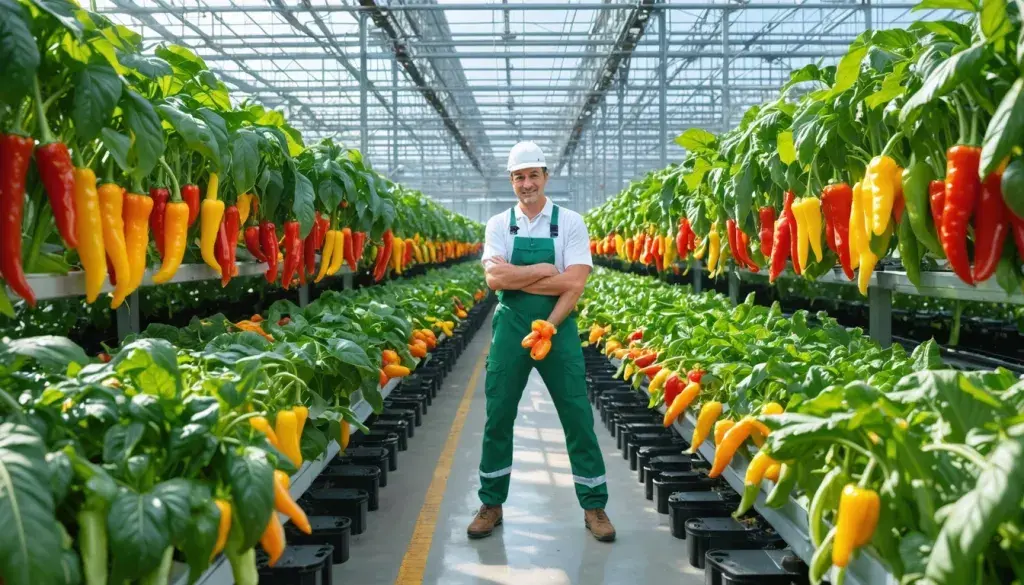
In Ontario, Canada, Fresh Venture Farms, a leading bell pepper propagator, has achieved a remarkable 16% average production increase over four years by revolutionizing its water management. This breakthrough matters because it demonstrates how targeted technologies can enhance yields, slash costs, and promote sustainable greenhouse farming amid growing demands for efficient resource use.
Innovative Techniques Fuel Production Surge
Fresh Venture Farms partnered with Ultramins over four years ago, deploying cavitating ultrasonic USAF™ DT-100 transmitters in their water pond, silos, and daily supply lines. Last year, they added nanobubble technology and optimized hydrogen peroxide (H₂O₂) dosing. These methods improve water quality by disrupting pathogens through cavitation and oxygenation, creating an environment hostile to diseases without harsh chemicals.
- Started with one transmitter in the pond; expanded to two for silos and five for irrigation.
- H₂O₂ use dropped over 50%, saving $0.10–$0.15 per square meter annually.
- 100% water recycling now possible due to reliable cleanliness.
Root Health and Pathogen Elimination
Florian Locher, a key figure at the farm, highlights dramatic root quality improvements in cultivation photos, with healthy roots persisting through the entire season. DNA sequencing from A&L Laboratories confirmed high Fusarium and Pythium levels in untreated samples, but USAF™ transmitters eradicated them. This eliminated synthetic agents entirely, cutting costs by 40–50% per square meter and yielding ROI in under six months.
Expert insight reveals why this excels: ultrasonic cavitation generates micro-jets that rupture pathogen cell walls, while nanobubbles enhance oxygen delivery and peroxide efficacy, mimicking natural sterilization in a controlled, chemical-light system.
Proven Data and Broader Implications
By 2025, production targets exceed 35 kg per square meter—a testament to streamlined irrigation. This aligns with global trends in precision agriculture, where clean water prevents up to 30% of crop losses from root rot in hydroponic setups. For bell pepper growers facing water scarcity and regulations on disinfectants, it's a model for scaling sustainably.
- No other disinfection methods needed.
- Pathogen-free water enables full recirculation, conserving resources.
- Cost reductions make it accessible for mid-sized operations.
A Model for Sustainable Agribusiness
Fresh Venture Farms' success underscores a shift toward tech-driven, low-input farming. Locher calls it a "no-brainer," urging peers to adopt similar systems. As climate pressures intensify, such innovations reduce environmental footprints, bolster food security, and pave the way for chemical-free produce, benefiting consumers and ecosystems alike.