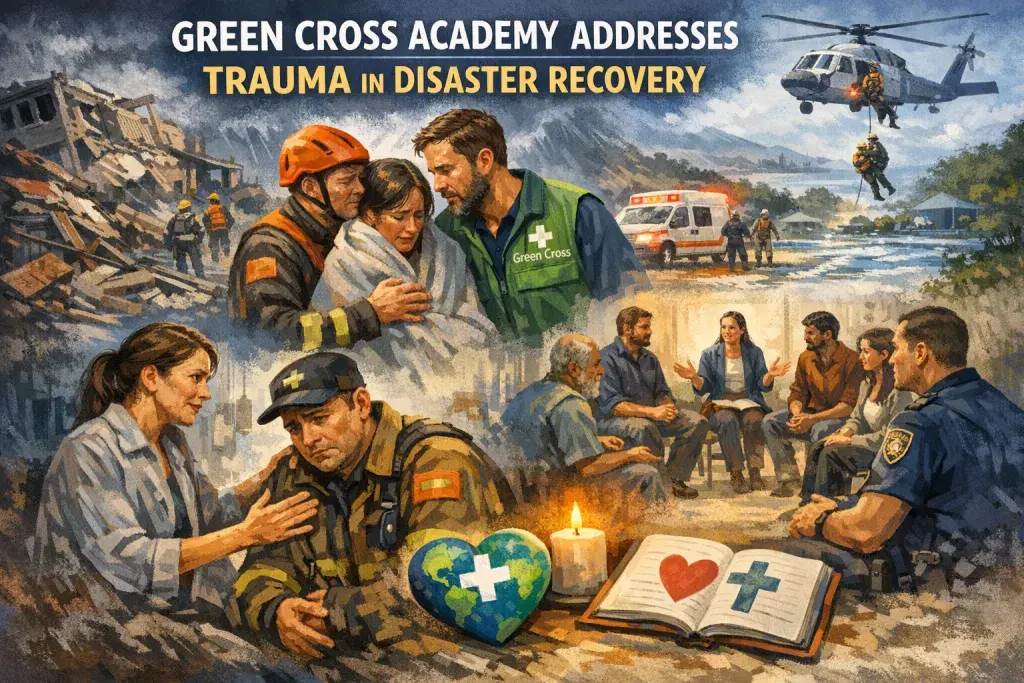
Disasters flood news feeds with images of rubble and rescue operations, but their mental toll emerges just as urgently. The World Health Organization estimates that one in five people exposed to such crises develops mental health issues like depression, anxiety, or PTSD. Green Cross Academy of Traumatology deploys teams to deliver psychological first aid, filling gaps when local systems falter.
Deployments Reveal Collective Emotional Strain
Dr. Benjamin Keyes, the academy's executive director, witnessed this during a recent hurricane response in Jamaica. Communities grappled with physical wreckage alongside emotional shock, as residents processed loss while rebuilding. Keyes, with over two decades in humanitarian settings from hurricanes to earthquakes, notes that entire groups often carry shared trauma.
Based at Divine Mercy University in Sterling, Virginia, the nonprofit trains professionals and first responders through certification programs. Volunteers offer psychological first aid, defusings, debriefings, and short counseling sessions right after crises. These interventions help individuals voice experiences in supportive settings, easing pressure and reducing PTSD risk, according to Keyes.
Support Extends to Frontline Responders
First responders face repeated trauma exposure, leading to compassion fatigue. Police, firefighters, paramedics, and dispatchers shift from one scene to another without pause. Green Cross provides debriefings and coping strategies, allowing them to acknowledge reactions rather than suppress them.
Early group conversations prove vital for communities bonded by common ordeals. This collective approach contrasts with individual therapy, addressing trauma's social fabric. Keyes emphasizes that simply creating space to share stories marks a critical first step in recovery.
HEART Model Offers Structured Path Forward
Keyes developed the HEART Model—Healing Emotional Affective Responses to Trauma—for complex trauma recovery. A seven-year study across eight U.S. residential programs for human trafficking survivors tracked symptom changes. Participants showed reduced flashbacks, intrusive memories, hypervigilance, depression, anxiety, isolation, and dissociation, alongside gains in self-esteem and positive self-perception.
The model incorporates spiritual elements, using dialogue or prayer tied to individuals' beliefs about God to foster awareness of presence and meaning. Staff conduct standardized assessments while guiding self-forgiveness and reflection. Adaptable to various faiths, it reconnects survivors with dignity regardless of background.
Resource Challenges Shape Future Expansion
Future research will test the model internationally, seeking evidence-based status as a best practice—the first recognized faith-based trauma framework. Operational for 25 years, Green Cross relies on grants, memberships, and volunteers for U.S. and global responses. Keyes stresses that readiness exists, but deployments hinge on funding.
Partnerships with philanthropies and corporations could scale training, research, and fieldwork. Psychological healing complements infrastructure repair, enabling true community resilience. As disasters intensify, such efforts underscore mental health's role in long-term recovery.