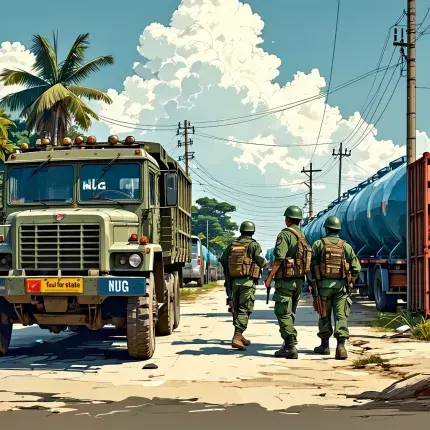
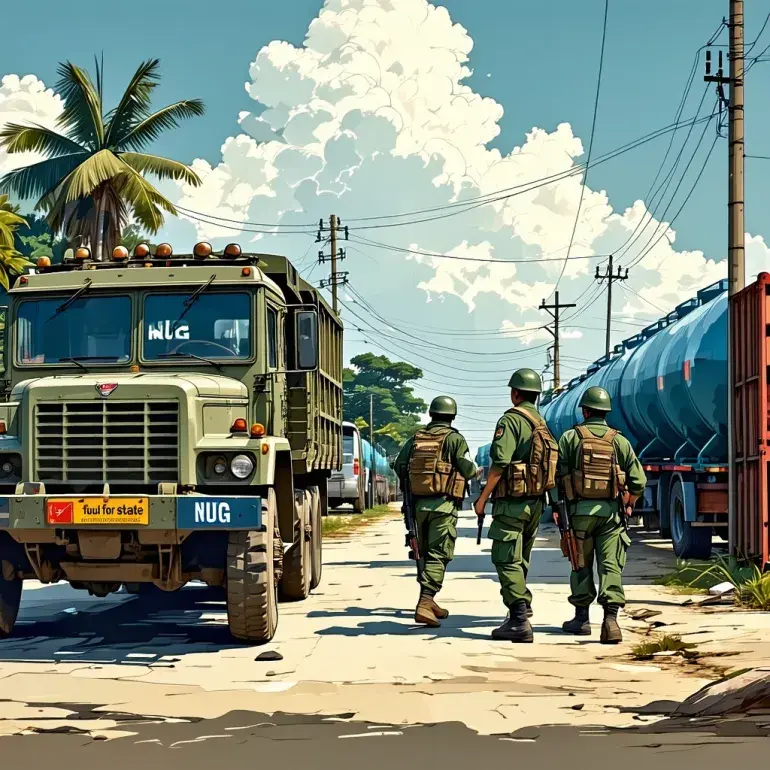
A confidential directive from Myanmar's National Unity Government (NUG) on March 6 has triggered an unusual public clash within the anti-junta resistance, centering on fuel distribution to Kachin, Chin, and Rakhine States. This rare internal friction highlights fragile unity in the revolutionary front amid ongoing civil war.
Key Provisions of the Directive
Signed by U Lwin Ko Latt, the order requires explicit NUG Ministry of Home Affairs and Immigration approval for all fuel transiting through NUG-controlled areas to the specified ethnic states. It mandates allowing oil imports into controlled zones but strictly prohibits exports without clearance.
- Targets Union Ministries, NUG Coordination Office, Military Region 1 Command, and local administrations.
- Enforces implementation at township tax and fine collection gates from issuance date.
- Cites global fuel shortages from Middle East disruptions, like the Iran war, to justify state-level resource controls.
Ethnic Leaders' Strong Objections
Salai Thang Cung Phe, Chairman of the Interim Chin National Consultative Council (ICNCC), decried the lack of consultation, calling it discriminatory against ethnic state residents. In Chin State, where revolutionaries control seven of nine townships—junta holds only Hakha and Tedim—fuel typically flows freely from central plains and India.
Critics warn of black market surges, price spikes, and civilian hardships, as storage in central areas without easy ethnic access sows confusion and dissent. Social media buzz among Chin communities and revolutionaries underscores widespread dissatisfaction.
NUG's Stated Purpose and Response
U Nay Phone Latt, NUG Prime Minister’s Office spokesperson, clarified the measure prevents fuel from reaching the military junta, labeled "terrorist military." Allies' shipments receive swift approval after verification, aiming for tight monitoring in resource-scarce times.
Implications for Resistance Unity
This dispute exposes tensions in federal-style governance experiments within the NUG framework, where balancing central oversight with ethnic autonomy is crucial. Past free flows fostered solidarity; now, risks of economic strain in frontline states could erode trust, boost junta propaganda, and complicate wartime logistics. As Myanmar's revolution enters its fourth year, such rifts threaten the anti-junta coalition's cohesion, vital against junta resilience despite losses. Resolving via dialogue may reinforce the federal democratic charter's promise of equitable resource sharing.