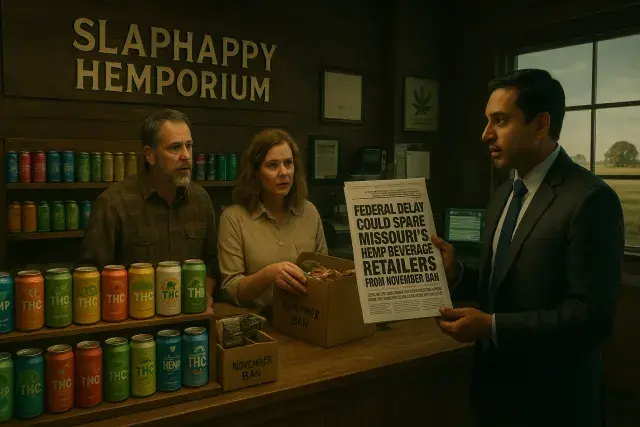

A federal deadline in December could reshape a Pennsylvania hemp market that industry advocates estimate generates a billion dollars a year, and operators in Lancaster County are already recalculating their business plans. At issue is a legal gap opened by the 2018 Farm Bill, which allowed hemp-derived products containing trace amounts of Delta 9 THC to be sold outside the tighter licensing structure that governs adult-use and medical cannabis. Congress has moved to close that loophole, and lawmakers in Harrisburg are debating their own restrictions, leaving farmers, processors, and retailers with a narrow window to adjust.
Jake Sitler, who founded the hemp brand Endo and serves as president of the Pennsylvania Hemp and Cannabis Guild, is opening storefronts in Lancaster and Marietta even as the regulatory picture darkens. His product lines lean on CBD as the primary ingredient but include Delta 9 THC and minor cannabinoids, placing them squarely in the category federal lawmakers are targeting. That dual-track composition is exactly what has drawn scrutiny; unlike state-licensed cannabis dispensaries, which operate under seed-to-sale tracking systems, batch testing mandates, and compliant packaging rules, many hemp retailers have functioned with far less oversight. Operators watching this fight from other states know the compliance gap matters - platforms offering seed to sale software connecticut have built entire businesses around closing exactly that kind of tracking void, and Pennsylvania's hemp sector may soon need something comparable. seed to sale software connecticut
Why Regulators Call It the Wild West
Pennsylvania Attorney General Dave Sunday has framed his concern plainly: companies can manufacture intoxicating hemp products without the licensing, testing, or inventory controls that apply to regulated cannabis. In a licensed dispensary, every product batch carries a certificate of analysis, moves through METRC or a comparable tracking system, and passes through point-of-sale terminals that log age verification at checkout. Hemp retailers selling Delta 9 beverages and gummies have not been required to meet that bar, which is precisely why lawmakers in both Harrisburg and Washington are pushing for tighter rules. Sitler posts 21-and-over signage voluntarily and says he supports regulation - but voluntary compliance is not the same as a licensing framework, and regulators know it.
What a Ban Would Mean for Farmers and Small Operators
A blanket ban would not just close storefronts; it would ripple back through the supply chain to the farmers growing hemp under agricultural permits, the processors extracting cannabinoids, and the wholesalers building menus around CBD and minor cannabinoid products. Sitler's argument - that agricultural production and small business owners "should not be destroyed" - reflects a broader tension playing out in statehouses nationwide: how to police an intoxicating product sold outside dispensary walls without wiping out legitimate agricultural revenue. A middle path, something closer to alcohol-style age gating, lab testing requirements, and licensing for retailers, is what guild advocates like Sitler are pushing for instead of an outright prohibition.
The Compliance Gap Operators Cannot Ignore
- Age verification enforcement remains inconsistent across hemp retail compared to licensed dispensaries
- Lab testing and certificates of analysis are not uniformly required for hemp-derived THC products
- Seed-to-sale tracking, standard in regulated cannabis, is largely absent from the hemp retail channel
- State and federal rules remain misaligned, creating uncertainty for wholesale pricing and product formulation
For dispensary operators watching from the licensed side of the industry, the hemp fight is a preview of what happens when a product category grows faster than its regulatory scaffolding. Whether Congress lands on a ban or a compliance framework, the operators who survive will likely be the ones already treating their supply chains like a regulated business - testing batches, logging inventory, and verifying age at the register - rather than waiting for the law to catch up.