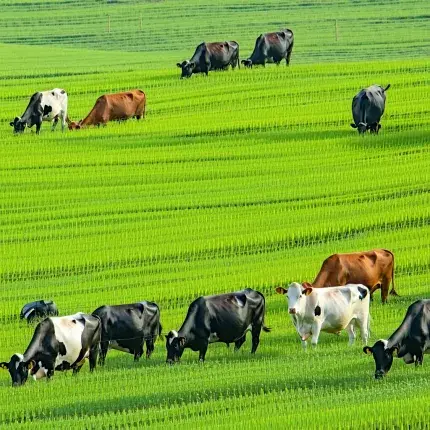
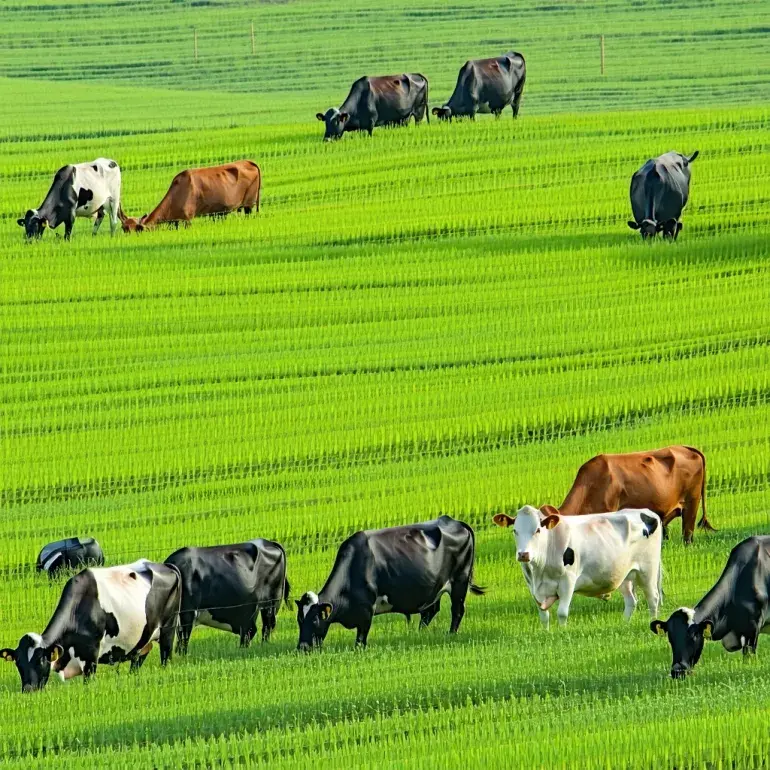
Time2Graze, a pioneering initiative launched this week by the Global Methane Hub, harnesses satellite technology to optimize grazing timing in pastures, potentially slashing methane emissions from livestock. Starting in Uruguay, Argentina, Chile, Colombia, Kenya, Tanzania, Ethiopia, and South Africa—nations reliant on extensive grazing systems—this approach promises a practical way to tackle agriculture's largest methane source without overhauling farming practices.
How Time2Graze Optimizes Pasture Grazing
The core idea is simple yet powerful: graze livestock when forage hits peak nutritional value during its growth cycle. Satellites monitor pasture health in real-time, pinpointing that "perfect moment" when grasses are richest in digestible energy. Cows fed higher-quality forage extract more calories per bite, reducing the need for microbial fermentation in their rumens—a process that generates methane as a byproduct.
- Targets the optimal growth stage for maximum digestibility and energy yield.
- Uses remote sensing to deliver precise grazing recommendations to farmers.
- Builds on principles of rotational grazing, amplified by data-driven timing.
Methane Emissions: Livestock's Hidden Climate Burden
Agriculture drives nearly 40% of human-caused methane, with livestock digestion—known as enteric fermentation—accounting for about 30% of that total. Methane traps over 80 times more heat than CO2 over 20 years, accelerating short-term warming even as it breaks down faster. In grazing-dominant regions, poor forage quality forces animals to consume more, amplifying emissions. Time2Graze addresses this root cause, potentially cutting per-animal methane by improving feed efficiency without additives or genetic tweaks.
Global Rollout and Measurable Impact
The Global Methane Hub, a philanthropy-led coalition, aims for a 35% global methane reduction by 2030. By focusing on high-impact grazing countries, Time2Graze could scale quickly. Early models suggest 10-20% emission drops per herd through better nutrition, comparable to feed supplements but more sustainable and cost-effective. Success here could inspire similar tech for rangelands worldwide, aligning farming with climate goals.
Implications for Sustainable Agriculture
Beyond emissions, optimal grazing enhances soil health, biodiversity, and farm resilience—key in climate-vulnerable areas like East Africa. This initiative shifts livestock systems toward precision agriculture, empowering smallholders with data once reserved for large operations. If proven, it could redefine how we balance food production and planetary health, proving that timing truly is everything in the fight against climate change.