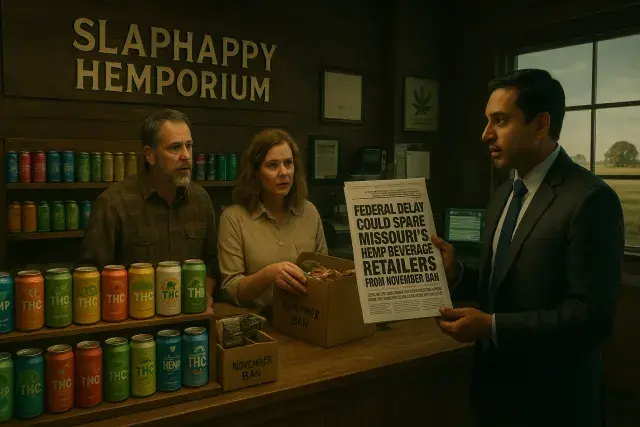
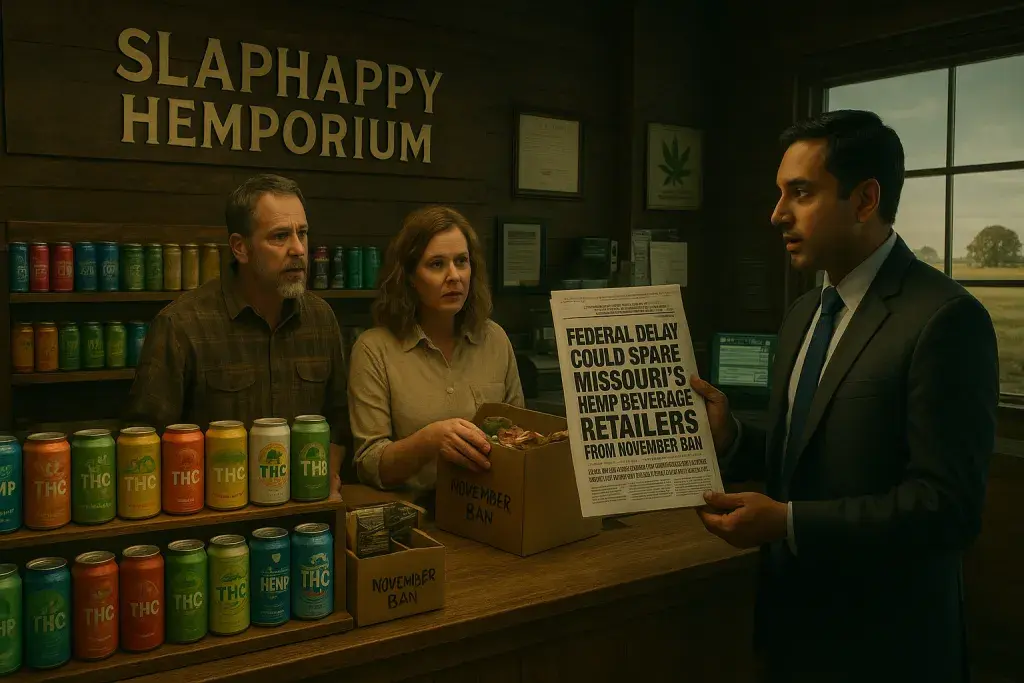
A Missouri law set to pull intoxicating hemp products off store shelves on Nov. 12 now has a real chance of a partial reprieve, but only for one category: beverages. The U.S. Senate approved a short-term federal funding measure early Saturday, Aug. 8, that would also delay a national ban on intoxicating hemp-derived THC products until Dec. 11. The bill still needs House approval and the president's signature before it takes effect, so nothing is finalized yet.
The mechanics here matter for anyone running a retail operation built around hemp-derived products. Missouri's law was written to mirror the federal ban Congress passed last year, but state lawmakers left themselves an out: if Congress delays its own ban, Missouri's prohibition narrows to everything except intoxicating beverages. That's a fairly unusual carve-out, and it puts beverage producers in a different compliance position than edible makers or tincture brands operating in the same state. For retailers juggling SKU management across multiple product categories, this kind of split enforcement date is a real operational headache - inventory systems, point-of-sale terminals, and compliance logs all need to reflect which products are legal to sell and which aren't, sometimes within the same store. Operators managing multi-category catalogs know this problem isn't unique to Missouri; it's part of why platforms offering dispensary software in Saskatchewan and other regulated markets have had to build flexible product-classification tools that can handle shifting legal categories without forcing a full system overhaul. dispensary software in Saskatchewan
What the Senate Vote Actually Changes
Jay Patel, president of the Missouri Hemp Trade Association, called the 61-31 Senate vote a "good sign" for the industry, noting there's bipartisan appetite for a longer-term regulatory fix. But he was careful not to oversell it. "Whatever happens on the federal side, it's not going to fully solve our problems in Missouri," Patel said. That's a fair read of the situation. A funding-bill delay buys time; it doesn't rewrite Missouri's underlying statute, and it doesn't resolve the lawsuit the Hemp Trade Association and a coalition of hemp businesses filed last month in the U.S. District Court for the Western District. That suit argues the state's definitions distinguishing hemp from marijuana are unconstitutionally vague - a claim that, if it gains traction, could reshape how Missouri regulators enforce the ban regardless of what Congress does.
A Fractured Product Line for Retailers
For operators like John Grady, who owns Slaphappy Hemporium with his wife Kara in Rosebud, Missouri, the practical impact is uneven. Grady said the Senate action makes it likely his company's THC seltzers can keep selling through December. But that's only part of the business. Edibles and other non-beverage products face the state ban no matter what happens in Washington, and Grady has already watched customers stock up on items they know will disappear from shelves in November. "We started off as a beverage producer," Grady said, "so for us, that is a good thing, but it also hurts the whole other part of our business." That kind of split outcome forces retailers to rethink wholesale ordering, clear out soon-to-be-illegal inventory, and recalibrate shelf space - all while tracking a compliance deadline that could still move again before December.
Why the December Deadline Matters
The Gradys, along with other members of hemp trade organizations, are using this window to push for comprehensive federal rules before Dec. 11. That's the real stakes here: a short-term delay isn't a solution, it's a runway. If Congress doesn't produce durable regulatory standards covering testing, labeling, and permissible THC thresholds in hemp products, retailers will be back in the same uncertain position in a few months, managing compliant packaging requirements and lab-testing protocols that could shift again with little notice. For dispensary operators, wholesalers, and brands watching from other states, Missouri is a preview of the operational strain that comes when state and federal timelines don't line up - and why COA verification, batch tracking, and adaptable point-of-sale systems have become non-negotiable parts of running a compliant hemp or cannabis business.