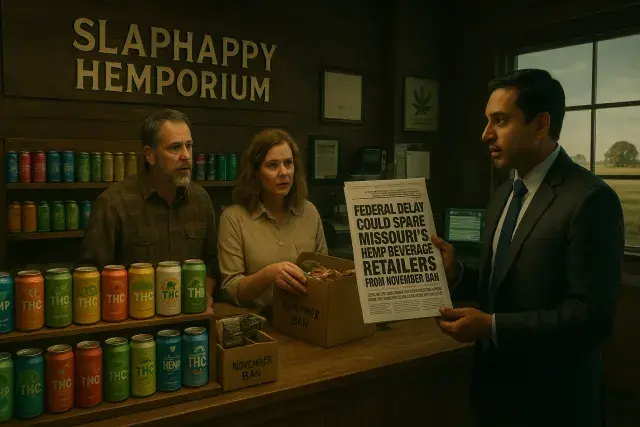

The federal law that will redefine hemp is already on the books, signed in November 2025, but exactly when it bites is still being negotiated in Washington. A Senate stopgap bill passed August 8 would push most of the restrictions from November 12, 2026 to December 11, 2026 - except for synthetic cannabinoids, which stay on the original date. The bill still needs House passage, so operators building compliance timelines around a single fixed date are working from an assumption, not a fact.
For dispensary owners and multi-state operators, the mechanics matter more than the politics. Section 781 of the FY2026 appropriations act swaps the old delta-9-only threshold for a total-THC standard that folds in THCA, using the standard 0.877 conversion factor. It also caps finished consumable products at 0.4mg of total THC per container. That's a hard ceiling that catches THCA flower, delta-9 gummies, and beverages that were built around a loophole in the 2018 Farm Bill's dry-weight measurement. Licensed cannabis retailers already operating under state seed-to-sale tracking and COA requirements are largely insulated from this fight, but the hemp-adjacent convenience and smoke-shop channel is not. Operators evaluating fulfillment infrastructure in adjacent markets, including those researching cannabis delivery software new jersey providers offer, should note that state-licensed adult-use and medical channels sit outside this federal hemp fight entirely - the compliance exposure lives in the unregulated hemp-derived product category, not in licensed dispensary operations.
The synthetic-versus-natural split creates a two-track compliance calendar that inventory managers need to track separately. Delta-8, delta-10, and HHC products, made by chemically converting hemp-derived CBD, are excluded from the hemp definition outright and face the earlier November 12 date regardless of what happens with the stopgap. THCA flower and other naturally occurring cannabinoids get the benefit of the proposed one-month delay, assuming the House goes along. For wholesale buyers building purchase orders and brands managing SKU transitions, that means synthetic-cannabinoid inventory carries materially higher near-term risk than THCA product lines.
What Operators Should Actually Be Watching
Three outcomes remain live: outright repeal of the definitional change, a further delay that some proposals push out to 2028, or a regulatory framework replacing prohibition with FDA-set age limits, testing, and potency caps. None has advanced with leadership backing. Retailers building 2026 budgets, hiring plans, or landlord lease commitments around hemp-derived cannabinoid sales are, in effect, betting on legislation that hasn't happened yet - a genuinely uncomfortable position for any small-business finance team trying to forecast a tax bill or inventory order.
State Rules Still Set the Retail Floor
Federal timing aside, state law already shapes what's sellable today. California's AB 8 routes THCA into licensed dispensaries. Oregon and Connecticut apply total-THC testing standards. New Jersey has banned intoxicating hemp retail outright. Texas enforcement is paused under a temporary restraining order. A permissive state framework doesn't override federal timing once it activates - it only determines what sits on top of that floor. For compliance teams, that means state-by-state monitoring isn't optional; it's the only stable ground available while Congress works out the rest.