Cannabis investors have spent five years learning a hard lesson: top-line growth doesn't mean much if a company can't turn that revenue into cash. Dozens of multi-state operators scaled aggressively, layered on debt, and diluted shareholders through repeated capital raises just to keep the lights on. Green Thumb Industries (OTC: GTBIF) took a different path, and its first-quarter results show why the company has built a reputation as one of the more disciplined operators in the sector.
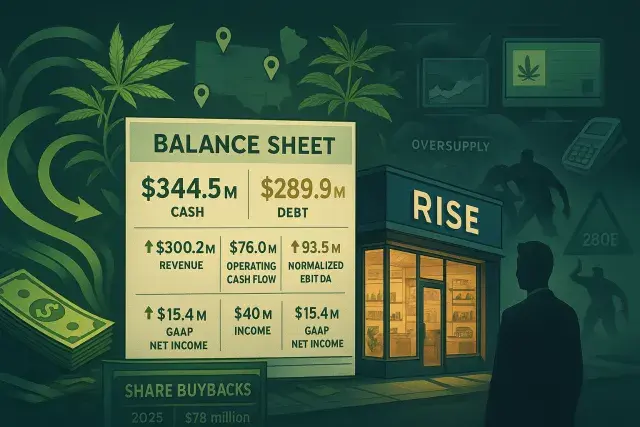
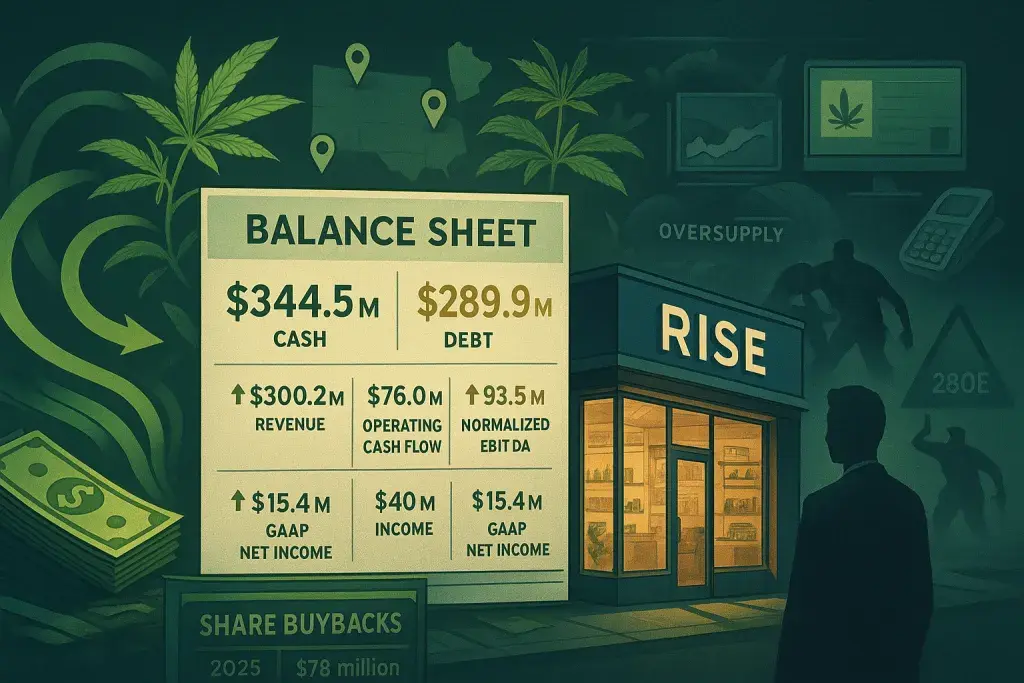
Revenue rose 7.4% year over year to $300.2 million, while operating cash flow came in at $76 million. Normalized EBITDA reached $93.5 million, and the company posted GAAP net income of $15.4 million - a combination that remains rare among cannabis operators still chasing basic profitability. That kind of consistency matters not just to investors but to the broader retail ecosystem around Green Thumb, including the point-of-sale providers, wholesale partners, and compliance vendors that depend on operators staying solvent. Operational infrastructure varies widely by market; in newer or smaller adult-use states, for instance, dispensary software in Rhode Island has to account for different reporting requirements than platforms built for larger, more mature markets like Illinois or California, which adds complexity for multi-state operators managing compliance logs and inventory tracking across jurisdictions. dispensary software in Rhode Island
Balance Sheet Strength in a Sector Starved for It
Green Thumb ended the quarter with roughly $344.5 million in cash and cash equivalents against $289.9 million in total debt - a balance sheet that would be unremarkable in most industries but stands out in cannabis, where 280E tax burdens routinely eat into margins and limit access to traditional banking and credit facilities. Rather than issuing new shares to raise capital, a move that dilutes existing shareholders, management repurchased about 6 million shares for $33.3 million during the quarter. After quarter-end, it bought back another 7.4 million shares, pushing total 2025 repurchases to nearly $78 million. That's not a rounding error.
Buybacks of that size send a signal. Management is telling the market it believes the stock is undervalued, and more importantly, that the underlying business throws off enough free cash flow to reward shareholders without starving growth initiatives. In an industry where dilution has been the default financing tool, that's a meaningfully different posture.
Selective Growth Instead of Growth at Any Cost
Green Thumb now operates more than 110 Rise dispensaries nationally, with exposure spanning both medical and adult-use markets. Expansion into Minnesota and Texas reflects a selective approach rather than a land grab - the kind of overextension that left other multi-state operators saddled with underperforming leases, excess budroom inventory, and stores in markets that never generated the wholesale pricing or foot traffic to justify the buildout. That restraint, more than any single quarterly metric, explains why Green Thumb hasn't needed the emergency capital raises that have hammered shareholders elsewhere in the sector.
What Still Stands in the Way
None of this erases the structural headwinds facing the industry. Federal legalization remains stalled, Section 280E continues to impose an effective tax rate far higher than most conventional businesses face, and pricing pressure persists in mature state markets where oversupply has pushed wholesale prices down. Green Thumb hasn't solved these problems - nobody has. What it has done is build a business that generates real cash under today's rules, rather than betting its survival on future legislation that may or may not arrive.
Smaller operators may still offer more upside if federal reform accelerates; higher risk tends to come with higher potential reward. But for operators, landlords, and suppliers watching which multi-state companies can actually pay their bills, Green Thumb's quarter offers a useful reminder: in cannabis retail, cash discipline is the metric that ultimately separates survivors from cautionary tales.