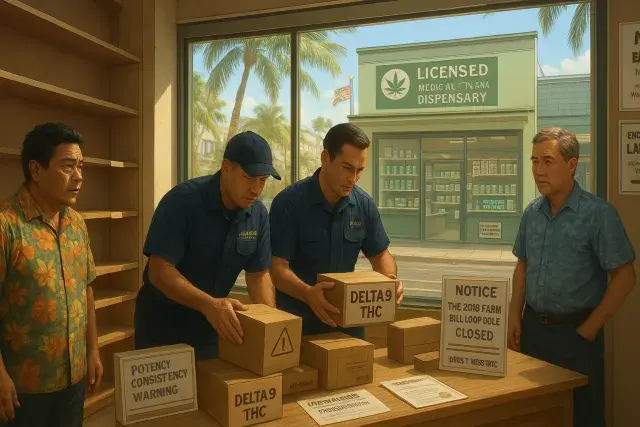
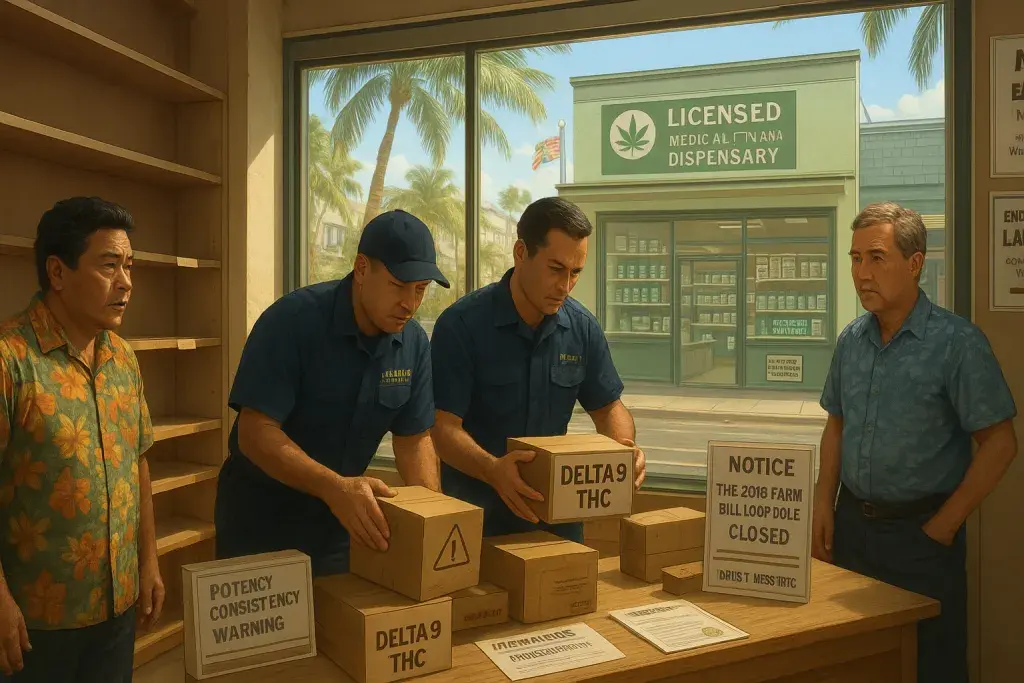
Hawaiʻi's Department of Health has moved to shut down the sale of hemp-derived THC products - smokable pre-rolls, gummies, drinks - at retailers operating outside the state's licensed medical marijuana system. The enforcement push, backed by a new law and interim administrative rules, has emptied shelves at shops across Oʻahu that had built entire business lines around federally legal hemp products containing intoxicating levels of THC. For operators who spent the past few years scaling up around that supply chain, the shift is not a minor compliance headache. It's an existential threat to the business model.
The mechanics behind this fight matter for anyone running a licensed cannabis storefront anywhere in the country. Hawaiʻi's licensed dispensaries operate under seed-to-sale tracking, mandatory lab testing, and compliant packaging rules that hemp retailers never had to follow. That regulatory gap is exactly what let unlicensed sellers undercut dispensary pricing - no cultivation license fees, no dispensary-grade compliance overhead, no state cannabis excise obligations layered on top of standard sales tax. Operators watching this unfold from other markets know how quickly that kind of asymmetry can hollow out a regulated retail channel. It's the same reason multistate operators increasingly lean on platforms like Metrc-compliant POS for Ohio systems to keep inventory, batch tracking, and tax reporting airtight - because the moment a state's enforcement arm decides to act, retailers without clean compliance logs have no cushion.
Hawaiʻi's 2020 hemp law always drew a distinction between growing hemp and selling hemp-derived THC products, but that distinction meant little as the federal 2018 Farm Bill created a loophole nationally: hemp with less than 0.3% delta-9 THC by weight was legal, and manufacturers quickly figured out how to engineer gummies, vapes, and beverages that delivered a comparable intoxicating effect using that threshold. The result was a parallel retail market that dispensary operators say drained customers away from licensed shops, particularly as Hawaiʻi's medical marijuana card enrollment has been declining. Whether that decline is driven by hemp competition, changing consumer habits, or something else is a fair question - correlation isn't causation - but the timing hasn't helped licensed operators make their case to skeptical lawmakers.
Who Gets to Sell, and Who Decides
The core tension here isn't really about chemistry. It's about market structure. Hawaiʻi capped medical dispensary licenses at eight statewide back in 2015, each permitted multiple retail locations under rules that have loosened over time. Critics of the enforcement crackdown argue this looks less like consumer protection and more like protecting an oligopoly that's had a decade to build brand loyalty, wholesale relationships, and political access - while unlicensed retailers, whatever their compliance shortcomings, were at least expanding consumer choice and pushing prices down.
Regulators counter that licensing caps exist precisely because cannabis retail carries product safety obligations most hemp retailers never met: consistent lab testing, verified certificates of analysis, tracked product batches, and age-gated sales enforcement. Untested hemp-derived THC products carry real consumer-safety uncertainty - potency inconsistency, contamination risk, unclear dosing - that licensed dispensaries are built to manage and hemp kiosks generally were not.
A Federal Reset Looming
Much of this dispute may become moot regardless of how the Honolulu federal court rules. Congress has already moved to close the Farm Bill loophole that made hemp-derived THC products legal nationwide, a change originally set to take effect in November before being pushed to December. For operators and suppliers who built supply chains around that loophole, the runway is shrinking fast - and the bigger lesson for any retailer, hemp or licensed cannabis, is the same one Hawaiʻi's dispensaries learned the hard way: regulatory arbitrage is a business strategy with an expiration date, even when nobody knows exactly when that date arrives.