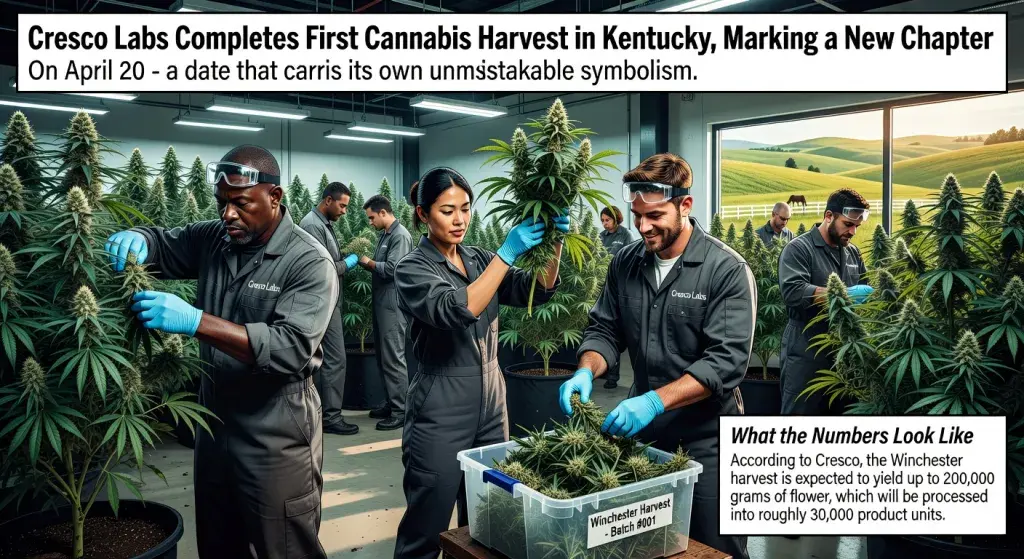
On April 20 - a date that carries its own unmistakable symbolism - Cresco Labs pulled more than 1,300 cannabis plants from its Winchester, Kentucky cultivation facility. It's the company's first harvest on Bluegrass soil and, more broadly, one of the earliest tangible signs that Kentucky's medical cannabis program is moving from infrastructure to actual product. After years of legislative debate and patient advocacy, the state is now weeks away from having locally grown, regulated cannabis on dispensary shelves.
What the Numbers Look Like
According to Cresco, the Winchester harvest is expected to yield up to 200,000 grams of flower, which will be processed into roughly 30,000 product units. That's a meaningful initial supply, though hardly a flood. The harvested plants still need to pass through drying, curing, laboratory testing, and final processing before they reach patients - a pipeline that typically takes several weeks from cut to counter.
"This harvest shows how Kentucky's program is shifting from build out to delivery," said Melissa Wagamon, Cresco's regional vice president. Fair enough. But the distinction matters: build-out is controlled by construction timelines and capital expenditure. Delivery introduces an entirely different set of variables - supply chain consistency, patient demand forecasting, regulatory compliance at the dispensary level. The hard part, in other words, may be just beginning.
Why Cresco's Presence Matters Here
Cresco Labs is not a startup feeling its way through a new market. The Chicago-headquartered multistate operator holds licenses across multiple states and ranks among the largest cannabis companies in the country by revenue. That depth of experience is precisely what Kentucky's fledgling program needs. New state markets often struggle with quality inconsistency, supply shortages, and regulatory growing pains - problems that tend to be less severe when experienced operators are in the mix early.
Executive Vice President John Sullivan framed the moment in patient-access terms: "Cresco Labs is proud to be part of this milestone harvest, and we remain committed to building a cultivation operation that Kentucky can be proud of - one that creates good jobs, supports local communities, and delivers the highest quality products to patients who need them." The language is corporate, sure. But the underlying point is substantive. Kentucky waited longer than most states to establish a medical cannabis framework, and the patients who pushed hardest for it have been watching the build-out with justified impatience.
Kentucky's Long Road to Medical Cannabis
Kentucky's relationship with cannabis has always been complicated. The state was historically one of the nation's largest producers of illicit marijuana, particularly in its eastern Appalachian counties, even as its legislature remained deeply conservative on drug policy. The medical cannabis law that eventually passed represented a genuine political shift - one driven less by ideology than by constituent pressure, particularly from patients with chronic pain, epilepsy, and cancer-related conditions who had exhausted conventional options.
The program's structure reflects that cautious political origin. Kentucky imposed strict qualifying conditions, tight licensing caps, and detailed regulatory oversight. None of this is unusual for a new medical state, but it does mean the supply side will ramp slowly. One harvest of 1,300 plants, however productive, won't satisfy statewide demand on its own. The question downstream is whether cultivation capacity can scale fast enough to prevent the shortages that plagued early programs in states like Missouri and Ohio.
What Comes Next
The immediate next step is straightforward: get this flower tested, processed, packaged, and onto dispensary shelves. The weeks ahead will reveal how smoothly Kentucky's seed-to-sale tracking, laboratory testing protocols, and retail distribution actually function under real conditions. Regulatory frameworks always look tidier on paper than they do in practice.
Longer term, the Winchester facility's output will need to grow - and other licensed cultivators will need to come online - to build what Wagamon called "a reliable supply they can count on." Reliability is the operative word. Patients with qualifying medical conditions aren't looking for a novelty; they need consistent access to consistent products. That's the promise. Whether Kentucky's program delivers on it will depend on execution over the next six to twelve months, not on any single harvest, however symbolically timed.
Still, you have to start somewhere. And 200,000 grams of Kentucky-grown medical cannabis is a more concrete starting point than most observers would have predicted even two years ago.