A wave of state legislation in 2025 is expanding how first responders can seek treatment for post-traumatic stress, moving beyond standard clinical options to include medical cannabis protections and supervised psychedelic research. The shift carries real implications for cannabis operators, medical program administrators, and employers in licensed markets - particularly as workplace drug testing policies collide with off-duty medical use.
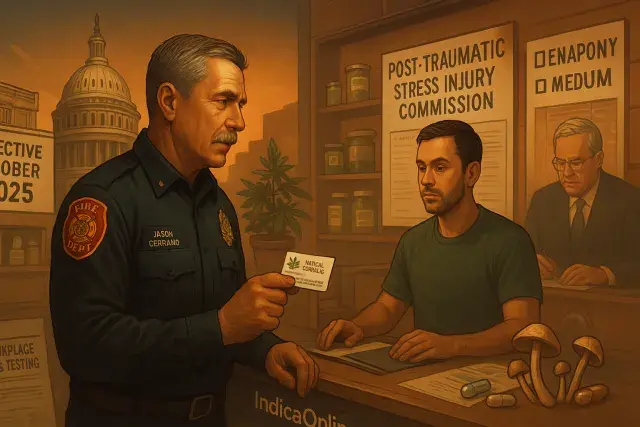
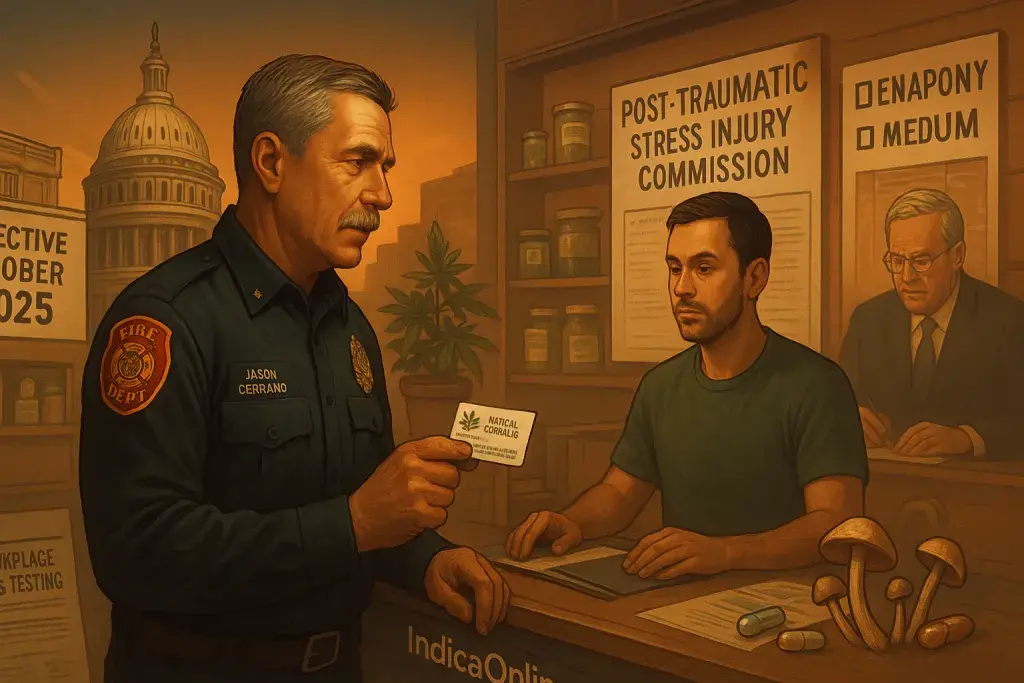
Maryland's approach is the most directly relevant to the licensed cannabis industry. The state enacted a law protecting firefighters, emergency medical technicians, paramedics, and other rescue workers from employment discrimination over the lawful off-duty use of medical marijuana. Effective October 2025, the law applies to registered medical cannabis patients who test positive for cannabis metabolites but are not impaired while on duty. This is the distinction that matters: metabolites can remain detectable long after impairment has passed, a pharmacological reality that has created compliance headaches for employers and workers alike across multiple licensed markets. Dispensary operators serving medical patients in states with similar workforce protections - including markets tracked by platforms like IndicaOnline Maine - already understand the documentation burden that falls on both the patient and the program when employment disputes arise. Maryland's law formalizes a protection that many medical cannabis advocates have pushed for in various forms across the country.
Ohio took a different structural path. Republican Gov. Mike DeWine signed legislation creating a Post-Traumatic Stress Injury Commission, tasked with reviewing applications from eligible first responders for assistance covering treatment costs. That framework is notable for what it does and doesn't do: it creates an official pathway for state-supported treatment funding without specifically endorsing any particular therapy. The commission model gives the state flexibility to recognize emerging treatment modalities as evidence develops - which, given the current policy direction on psychedelic-assisted therapy, may matter sooner than expected.
Psilocybin and Ibogaine Enter the Policy Conversation
Two states are actively exploring psychedelic-assisted therapies, which represents a meaningful expansion of the regulatory perimeter. Connecticut expanded an existing Yale University pilot program studying psilocybin-assisted therapy, opening participation to any state resident 18 or older who meets the clinical eligibility criteria established by Yale's institutional review board. The program had previously been limited to veterans, retired first responders, and frontline health care workers.
Missouri lawmakers advanced a bill that would allow veterans and first responders in approved research studies to receive psilocybin and ibogaine under medical supervision for PTSD and other mental health conditions. The legislature adjourned in May before the bill reached the governor's desk - a familiar outcome in state-level psychedelic policy, where momentum often outpaces the legislative calendar. Still, the bill's advancement signals genuine bipartisan interest in the issue, not just symbolic gesture.
Here's the catch for cannabis operators watching this space: psychedelic therapy research programs and medical cannabis protections occupy entirely different regulatory lanes, but they share a patient-facing dynamic that licensed cannabis businesses already know well. Patients who seek recognized medical pathways expect documentation, privacy protections, and employer non-discrimination. As states layer new treatment categories onto existing frameworks, the administrative complexity for employers, insurers, and medical program administrators grows accordingly.
What the Workplace Protection Model Means for Cannabis Operators
Maryland's off-duty use protection is the clearest near-term operational signal. For licensed cannabis dispensaries operating in or near markets where first responders are a meaningful patient demographic, this kind of legislation validates the medical model in a way that shapes demand, documentation expectations, and - frankly - the register conversation at point of sale.
Medical cannabis patients who work in high-scrutiny professions have historically been cautious about their registration status, precisely because employment consequences were unpredictable. That caution has downstream effects: it suppresses medical program enrollment, shapes product preferences toward lower-metabolite-detection profiles, and creates friction in patient-budtender consultations. Protections like Maryland's don't eliminate that caution overnight, but they change the risk calculus.
As Jason Cerrano - a retired firefighter and paramedic with more than two decades in Missouri - described the psychological burden on first responders: the cumulative exposure to traumatic events distorts normal perception over time. That context matters for understanding why this legislative push has gained traction across party lines. It isn't fringe. The public safety workforce represents a constituency that carries significant political weight, and state legislators on both sides of the aisle have shown willingness to support expanded treatment options when the beneficiary group is this visible.
The Broader Compliance Signal
For cannabis retailers and multi-state operators, the pattern emerging from 2025 state legislation is worth tracking carefully. States are not just expanding who can access cannabis medically - they are beginning to define what employment protections attach to that access. That is a compliance and HR policy issue, not just a patient-rights issue.
Operators with dispensary staff who hold medical cannabis cards in states without similar off-duty protections remain in a gray zone. And as psychedelic research programs expand eligibility beyond narrow veteran cohorts, the question of workplace protection for participants in those studies will eventually land on legislative desks with the same force it already has in the medical cannabis context. The operators, employers, and compliance professionals who are tracking this now will be better positioned when those conversations arrive.